
The first homes in Renewal SA’s extended Seaton project area will be built using innovative new materials that offer significant sustainability benefits and the potential to cut delivery times.
Construction will soon begin on eight homes in the project’s second stage, marking the start of a broader pipeline of more than 1,300 homes as the initial 137‑home stage progresses toward completion.
The two-storey homes are being built using Structural Insulated Panels (SIPs) instead of traditional frames, bricks and plasterboard.
SIPs consist of two durable outer layers bonded to a core of high-density insulating foam, with less air leakage bolstering energy performance for the home.
The panels are custom manufactured to design specifications, including door and window openings, and delivered to site for assembly on a traditional slab.
Their use streamlines and fast-tracks construction by reducing or completely bypassing framing, bricklaying and internal lining, while factory construction reduces waste through good design and offcut recycling.
Peter Gatsios, Renewal SA Executive Director of Residential Project Delivery and Assets, said the use of the product in a metropolitan setting followed a successful trial of SIPs in regional South Australia.
“Eight homes were constructed in Ceduna using the same materials, which proved to be an effective and efficient alternative to traditional construction methods,” Mr Gatsios said.
“We’re pleased to now bring this innovation to one of our metropolitan projects.”
Mr Gatsios said design and individuality were not compromised using this method and the Seaton project would help Renewal SA better understand how SIPs can perform in metropolitan Adelaide, including where they may improve efficiency and delivery timeframes.
“The use of SIPs lets us maintain just as much flexibility in the build as you would usually see,” he said.
“Buyers can still customise their home, add feature walls, clad with other surfaces, and work with the full range of material selections.”
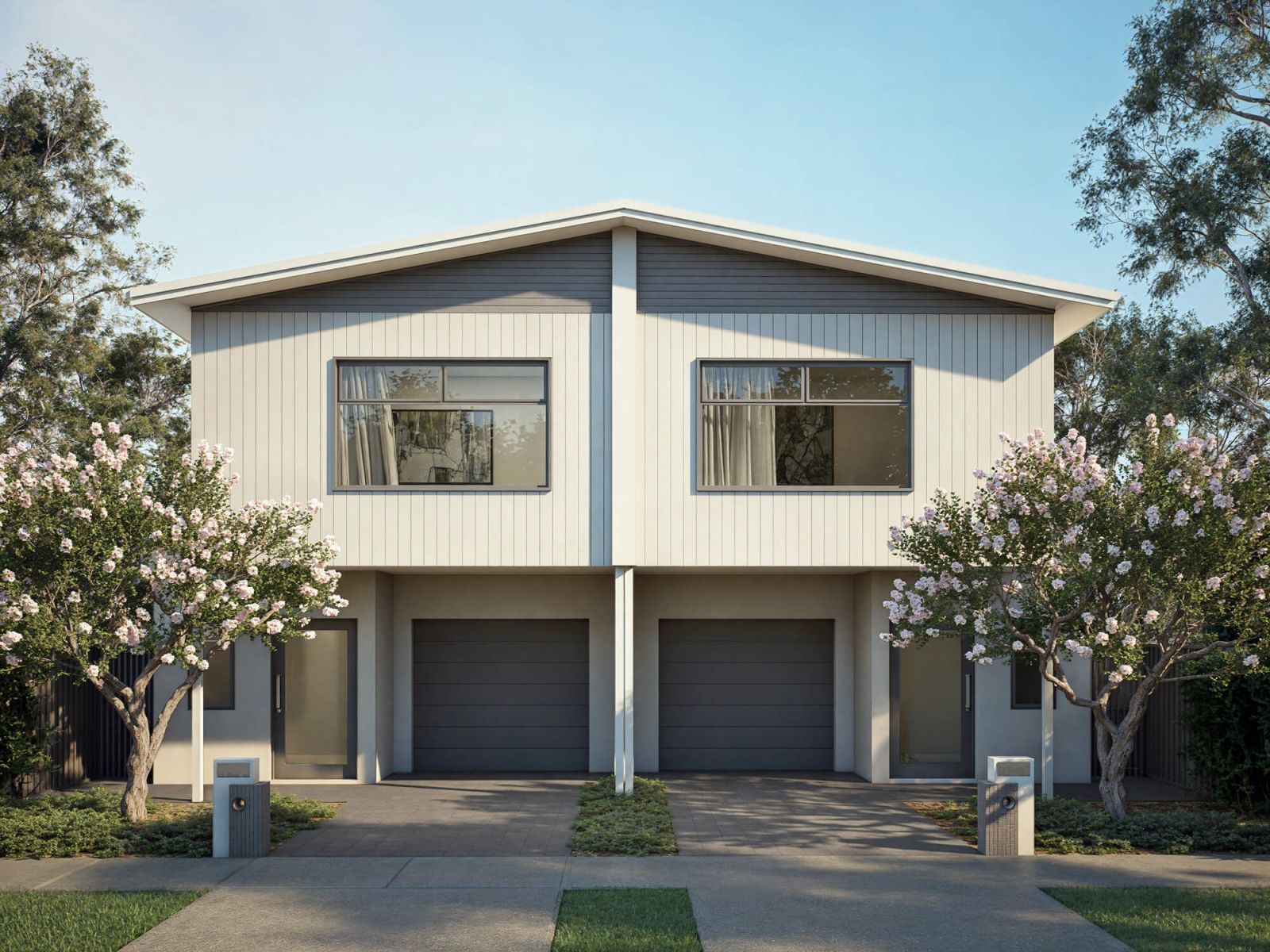
Artist impression of a home to be built in Seaton using Structural Insulated Panels (SIPs)
Property Council SA Executive Director Bruce Djite said SIPs offer an innovative answer to improving housing volume and delivery.
“To tackle the housing challenge, we’ve got to be open to smarter ways of building. SIPs are a smart solution,” he said.
Mr Djite applauded the initiative, encouraging measures to help bolster housing not just in Seaton, but statewide.
“The SA Division of the Property Council strongly supports this kind of forward-thinking approach that can deliver homes faster, create local jobs, and help unlock housing opportunities across the state.
“There’s no silver bullet to the housing crisis, but innovations like SIPs are a step in the right direction. SIPs offer a real opportunity to build smarter, faster, and more affordably.”
The SIPs being used at Seaton are supplied by Perth-based manufacturer SIPform, with construction by its subsidiary Form Homes, which has delivered about 300 homes using this method across Australia and New Zealand.
Jonathan Goldsworthy, co-founder of SIPform and Form Homes, said he hoped South Australia would embrace the construction method as his business aimed to reduce building delays and costs through scale and innovation.
“We’ve travelled the world looking at homes using similar construction methods and working out ways to improve productivity,” Mr Goldsworthy said.
“Every state in Australia is racing to build homes while experiencing shortages of trades and labour. We believe we have part of the solution.”
This new development stage at Seaton is bounded by Frederick Road and Parker, Matthews and Lark Avenue, where 27 ageing homes were removed to make way for 66 new dwellings and reserve areas.
Sales began for both vacant land allotments and house and land packages in Stage 2 in mid-2025.
Traditionally built homes in this stage are also being constructed by Urban Concept, a local builder that also came on board to deliver house and land packages.
Dozens more homes will be built by a range of companies selected by purchasers of vacant allotments, while 15 new homes will be set aside for modern, fit for purpose, government owned public housing.
“Housing diversity and opportunities for people from all walks of life are key in the creation of vibrant communities, and that’s exactly what we’re aiming to deliver at Seaton,” Mr Gatsios said.
On the other side of Matthews Avenue, Seaton’s early stage, which was originally intended to be the entirety of the project before Renewal SA announced its expansion in 2024, is progressing quickly.
Dozens of residents will begin moving into the first privately owned homes within weeks, marking the start of a strong pipeline of completions throughout the remainder of the year.
Construction is also progressing on the first of two large apartment complexes earmarked for public and affordable rental housing.
A rolling program of sales and construction will continue at Seaton over the next decade, transforming the suburb into a vibrant, inclusive community with a mix of affordable and social housing.
Civil works are soon to be underway on the project’s third development stage with demolition complete, and works delivering roads, sewer, water and power infrastructure expected to begin mid-year.
A dedicated sales centre is programmed to open nearby within months, as volumes of housing availability begin to ramp up.
Renewal SA’s vision will see the replacement of 388 dated South Australian Housing Trust homes with a total of 1,452 new privately owned and public homes over the life of the project.
Find out more about Seaton
Page last updated 18 May 2026